A research project that is seeking to find the ‘missed millions’ of people who go undiagnosed with tuberculosis (TB) each year has informed new World Health Organization guidelines.
Start4All, led by Liverpool School of Tropical Medicine, is a four-year programme aimed at improving access to TB screening and diagnosis and, ultimately, enabling more underserved people with TB to reach care.
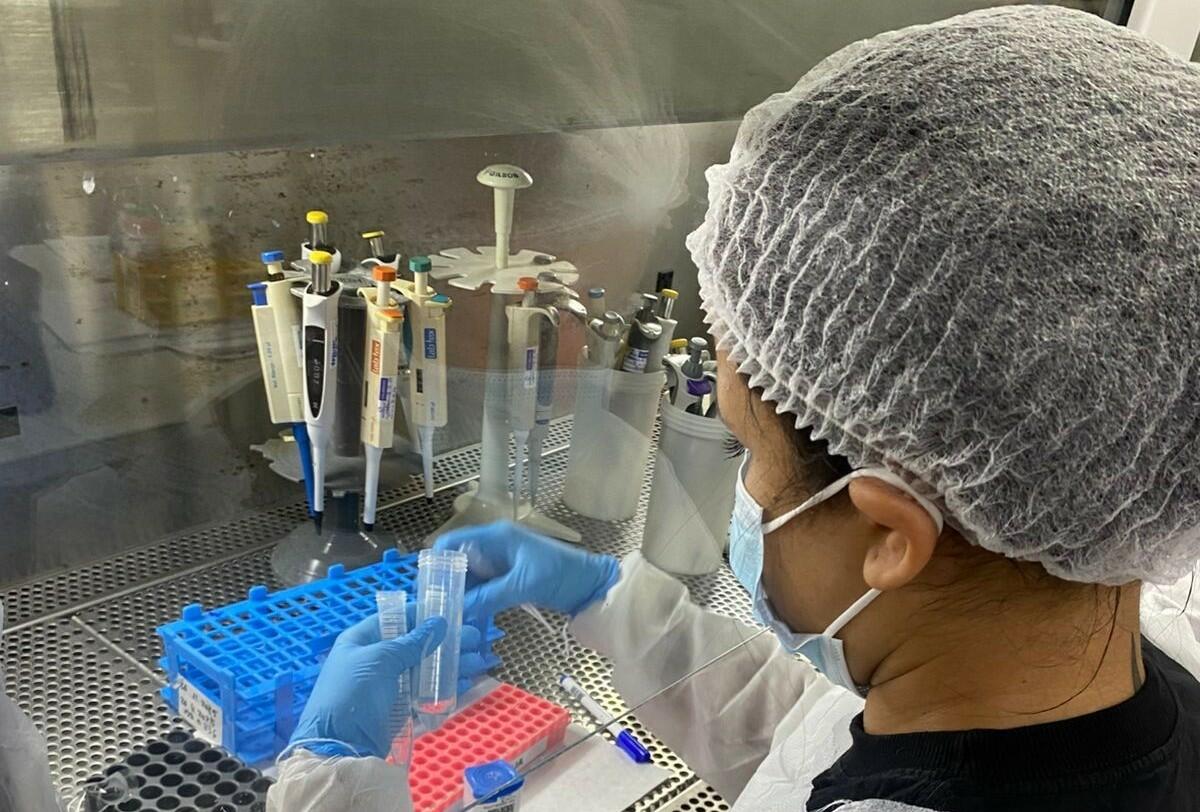
Funded by Unitaid and working with the Stop TB Partnership and expert collaborators in seven high TB burden countries, the team’s mixed-methods research - working at the lowest levels of care and in outreach in TB-affected communities - has contributed to new WHO guidelines on pooled testing. Pooled testing is a time and cost-saving method that combines multiple sputum (phlegm) specimens into one TB test cartridge and allows for more people to get tested in resource-constrained settings.
Start4All generated some of the first global evidence showing that pooled testing is feasible, acceptable, and can substantially expand access to molecular TB diagnosis by reducing costs without compromising accuracy.
The new WHO guidelines, which also include the use of near point of care tests and easy-to-collect tongue swabs as an alternative to sputum, reflect a broader shift toward decentralised, simpler testing that addresses long-standing access barriers, especially for the most vulnerable TB-affected people.
Global efforts to tackle TB – a highly infectious disease that causes approximately 1.3 million deaths per year, more than any other single infection – are hampered by the large number of people sick with TB who remain undiagnosed, thereby going untreated and, unknowingly, able to spread TB in their homes and communities. Chronic underinvestment has led to limited and inequitable access to WHO-recommended molecular rapid diagnostic tests, which only one-in-two people globally receive as their initial test.
Dr Rachel Byrne, Lecturer in Diagnostics at LSTM and Co-Chief Investigator on Start4All Phase 2, said: “The WHO recommendation endorsing pooled testing for TB represents a significant global shift toward maximising diagnostic capacity, reducing costs, and expanding access to testing.
The Start4All consortium brings together much of the world’s leading expertise in pooled testing, an initiative originally convened by our late PI, Professor Luis Cuevas; this recommendation stands as a further testament to his lasting impact on global health. It also reinforces an important lesson, that a diagnostic test is only valuable when it is available as close as possible to the point of need, and pooled testing offers a practical pathway to expanding access to TB diagnosis.”
In the first phase of the Start4All study recruiting over 15,000 participants, pooled sputum testing was shown to be feasible and acceptable, and demonstrated diagnostic performance comparable to individual testing. Economic modelling indicated significant reductions in costs detected across different levels of the health system, and especially in primary healthcare facilities, primarily through the reduction in individual, single-use cartridge tests – a potentially game-changing finding for National TB Programmes.
The team presented their findings at the prestigious “Union-CDC Late Breaker” session at the Union World Conference on Lung Health late last year, following on from their submission and presentation in Geneva to the WHO Guideline Development Group (GDG).
Dr Vibol Iem, Co-Chief Investigator on Start4All Phase 2 at LSTM, said: “The clock is ticking on our promise to end TB. The WHO recommendation on pooled testing marks a major advance, achieved not through new technology, but through smarter use of the tools we already have. When millions remain undiagnosed, expanding access to molecular testing is not optional, it is our shared moral duty.”
Dr Augustine Choko, Senior Lecturer at LSTM and Start4All lead at the Malawi Liverpool Wellcome Programme, said: "With reduced funding pushing resource-constrained settings such as Malawi to make painful decisions on almost all health issues, pooling in TB testing presents a cost-cutting yet an effective and efficient option that could make a difference to patient care."
Victor Santana Santos, Associate Professor, Department of Medicine, Universidade Federal de Sergipe (UFS) and Principal Investigator of Start4All in Brazil said: "Sputum sample pooling for tuberculosis diagnosis in Brazil represents a strategic, evidence-based approach to expand testing capacity. By pooling specimens, public health laboratories can streamline workflows, improve efficiency, and reduce cartridge use and operational costs, enabling more rational allocation of limited resources. Ultimately, pooling can facilitate broader and timelier access to diagnosis, strengthening person-centred TB care."
Start4All will soon begin enrolment in the second phase, comprising three standalone studies that will aim to expand the current WHO recommendations of near point of care tests, including crucially to the neglected groups of people without symptoms and children, as well as contribute to the upcoming WHO screening GDG planned for November 2026.
Read more about the new guidelines via Unitaid and the Stop TB Partnership.