It’s 2am in paediatric emergency. A toddler with a fever. An exhausted parent. Somewhere between hydration advice and discharge planning comes the question:
“Doctor… can I just ask … is that MMR vaccine really safe?”
There - vaccine policy meets reality.
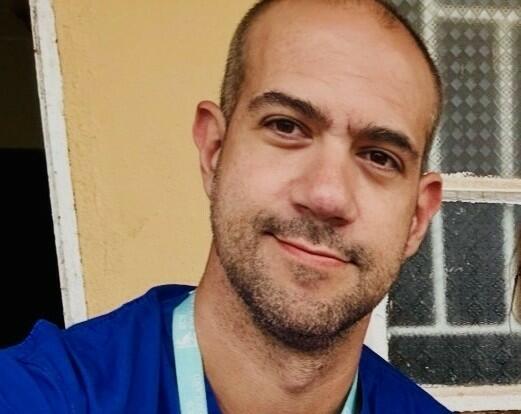
For Dr Hany Ragab, Consultant Paediatric Emergency Physician and PhD researcher with ReCITE, these are moments where trust stops being theoretical and becomes negotiated in real time - often in emotionally charged, time-pressured spaces.
“You quickly realise,” he reflects, “that vaccine decisions rarely begin in the consultation room. By the time someone asks that question, they’ve already travelled through weeks of social media, family conversations, headlines, and past experiences with the NHS. You’re not starting the conversation but entering it midstream.”
From Cubicle to Systems
Alongside his clinical work, Dr Ragab is undertaking a PhD aligned with ReCITE’s focus on trust, communication and evidence translation. His research examines how vaccine decisions are shaped not only by individual beliefs, but by wider systems such as digital information environments, institutional behaviour, policy signals, service design, and the lived experience of inequality.
At the centre of his doctoral work is a trust-centred systems framework integrating geospatial and policy analysis with co-designed clinical communication interventions. The aim is not simply to describe trust, but to identify practical levers within health systems that can strengthen it, particularly where confidence and access are unevenly distributed.
What drew him to ReCITE was ReCITE’s refusal to treat trust as a buzzword.
“When I first encountered ReCITE, what struck me was that trust wasn’t treated as a moral aspiration,” he says. “It was treated as something that could be examined rigorously - as structural as well as personal.”
As a clinician, trust appears in subtle ways: a pause before a parent answers, the willingness to voice doubt, the tone of a follow-up question. ReCITE widened that lens. It recognised that these moments are shaped by forces far beyond the consultation room namely by digital ecosystems, political rhetoric, and long-standing experiences of institutions.
“That framing felt honest,” he reflects. “Because I can present flawless scientific evidence, but if someone’s broader experience of institutions has been fragile or inconsistent, that evidence lands differently.”
Wearing Two Hats
Balancing consultant life with doctoral research requires constant cognitive switching.
“Emergency medicine trains you to think quickly and decisively,” he says. “Research requires you to, sometimes painfully, slow down.”
Yet the friction is productive. Clinical practice sharpens his research questions. Patterns of concern, recurring narratives, and clusters of uncertainty across communities feed directly into the systems-level work of his PhD.
At the same time, research has changed his clinical posture.
“I’m less focused on correcting and more focused on understanding the information journey someone has been on before they arrived. It’s not about winning a debate. It’s about building continuity.”
That shift is subtle but significant. It changes tone, pacing, and how uncertainty is handled. It is also personal. As a father of a young child, Dr Ragab is navigating the same primary care pathways.
“Experiencing the system as a parent,” he notes, “reminds you how much of trust is shaped by small details such as appointment access, clarity of communication, whether you feel listened to. Those things matter just as much as the data.”
Trust, Inequality and Institutional Reflection
A central thread of his doctoral work is that vaccine confidence is uneven. It maps onto deprivation, digital exposure, historical marginalisation, and service design.
“It’s easier to design a new campaign than to redesign a service,” he observes. “But service design may matter more.”
For communities facing persistent disadvantage, trust is not built through sharper slogans alone. It is shaped over time by whether institutions feel consistent, transparent, and responsive.
ReCITE’s interdisciplinary model of bringing together research, policy, and lived experience provides space to ask more uncomfortable upstream questions:
- How do communities experience health institutions over decades?
- How does digital information amplify or distort that experience?
- What does “evidence” mean where institutional credibility has been fragile?
Addressing inequalities in vaccine uptake, he suggests, requires institutional self-reflection as much as public persuasion.
Evidence in Use, Not Just on Paper
A distinctive feature of ReCITE is its emphasis on actionable knowledge. Dr Ragab’s work is not confined to conceptual modelling; it seeks to operationalise trust within healthcare systems.
“The opportunity,” he says, “is recognising that trust can be designed for.”
Service structure, continuity, community partnership, digital monitoring, and communication training all shape how credible a health system feels in everyday life.
The challenge is institutional inertia. Health systems are complex, risk-averse, and under operational pressure. Embedding trust-building into routine practice requires sustained leadership and cross-sector collaboration.
Turning trust-focused research into action, he acknowledges, means moving beyond publications to implementation which is always the harder step.
Why This Matters Now
Debates around vaccination, misinformation, and public confidence in health institutions are not abstract. The UK’s recent loss of measles elimination status - a development Dr Ragab addressed in an expert commentary - underscores how fragile vaccination gains can become when trust, access, and sustained engagement falter.
“This isn’t just about misinformation,” he explains. “It’s about how credible institutions feel in people’s lives.”
Re-achieving and sustaining high vaccine uptake will not come from slogans alone. It will require relational continuity, institutional credibility, and evidence translated thoughtfully into practice.
In that sense, the work supported through ReCITE is both timely and necessary.
Looking Ahead
If this doctoral work achieves what he hopes, the change may be more subtle but meaningful in everyday interactions rather than arrive with dramatic headlines.
- For clinicians, conversations about vaccination might feel less adversarial and more grounded in shared understanding. Trust-building would be recognised as a core professional skill, supported by training and system design rather than left to individual instinct.
- For families, healthcare encounters might feel less transactional and more continuous. Concerns would be met with curiosity rather than correction. Confidence in vaccination would stem not only from data presented, but from feeling respected within the system.
- At a systems level, rather than measured only after it declines, trust would be treated as something proactively designed into policy, digital strategy, and service delivery.
Ultimately, he hopes the work contributes to a shift from reacting to mistrust toward preventing it.
“Trust isn’t built in a PowerPoint slide,” he says. “It’s built in relationships and relationships are shaped by systems.”
|
ReCITE is funded by the Arts and Humanities Research Council (AHRC), part of UK Research and Innovation. |
 |

Join our LinkedIn community.